





Type A
Type A individuals process stimuli with the temporal lobe. They are visual, practical, spontaneous, they process information instantaneously, and they consequently act and react swiftly – at lightning speed. The neurotransmitter serotonin plays the most significant role in Type A individuals: when it is at low levels, it makes them fast and effective, whereas, when it reaches high levels, it causes panic reactions, irritability and extreme hastiness leading to negative results. Haste and tension give them agility enabling them to easily overcome obstacles and make them practical, confident, and perceptive. Their inner tension makes them spontaneous and forces them to act and take risks. It makes them impatient and quick-tempered.
Type B
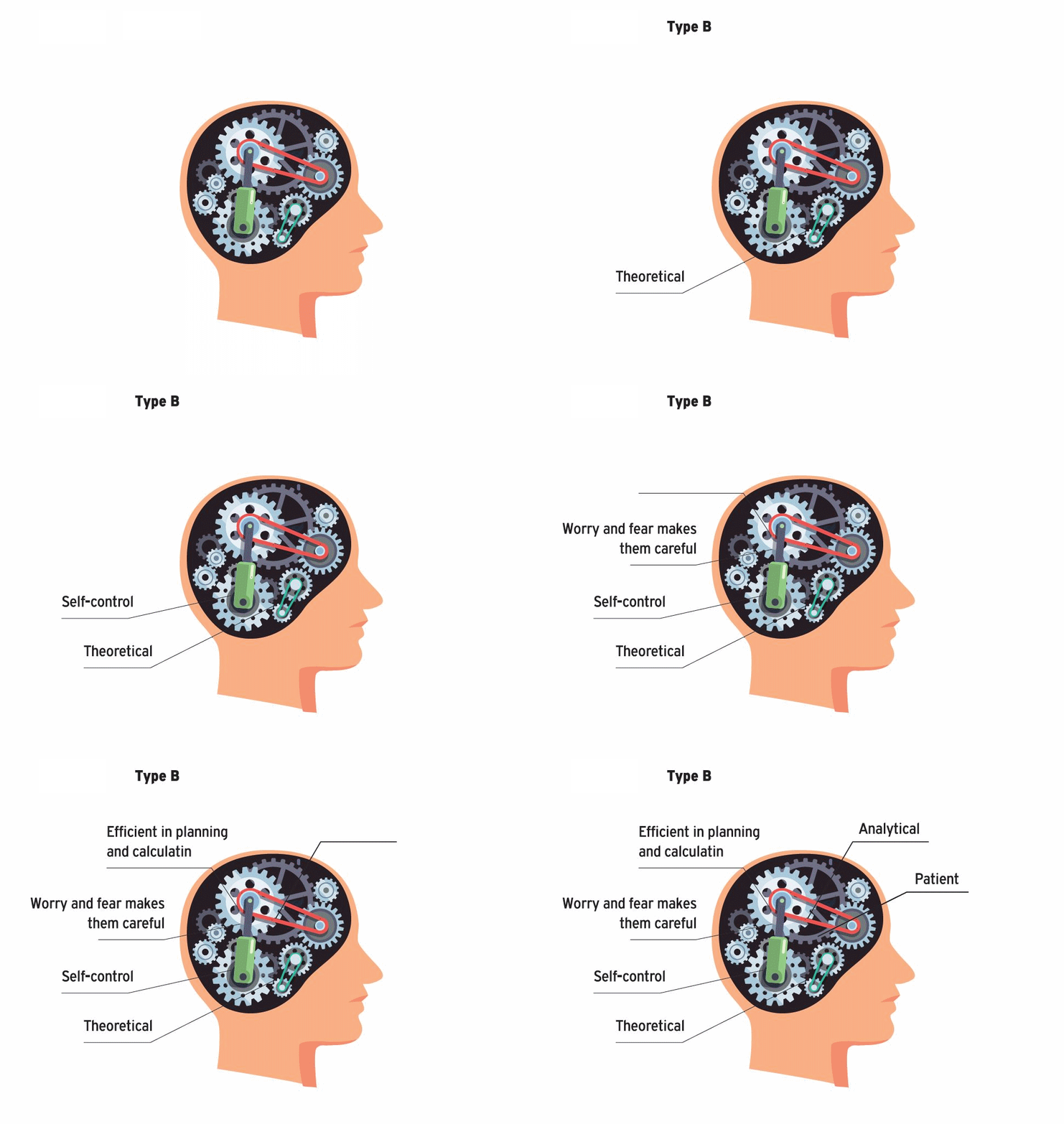
Type B individuals process stimuli with the amygdala. They are auditory, analytical, careful, patient, with high self-control and a strong sense of responsibility toward fulfilling their goals, they process information successively, which is why they are cautious in action. For Type B individuals, the neurotransmitter dopamine plays the most important role: when it is at low levels, it allows the person to take action, but, when it reaches high levels, it leads to repetitive thinking, which hinders action. Type B individuals tend to suffer from anxiety; they worry about the future and procrastinate. Their tendency to worry and their fear(s) make them particularly careful. They seldom take a wrong decision, since they seldom take risks.

Type C
Type C individuals process stimuli with the hippocampus. They are kinesthetic, they process information with persistence, passion, and attention to detail, and persist in accomplishing their targets. They are systematic, innovators, hard workers, stubborn and perfectionists. They have the ability to realize their goals. Action in Type C individuals is determined by the simultaneous function of both serotonin and dopamine. When serotonin and dopamine are in the correct and sufficient quantity in the hippocampus, Type C individuals are led to calm, swift and efficient action. However, high levels of these hormones force them to behave and act with stubbornness and inflexibility. They recall past traumatic experiences and have obsessive behaviour. They are highly demanding persons and want to impose their opinions, views, ideas – even their rules – on others. They never abandon a problematic situation

u00a9 2026 Tri-Anthropo-Type Model Paschalidis